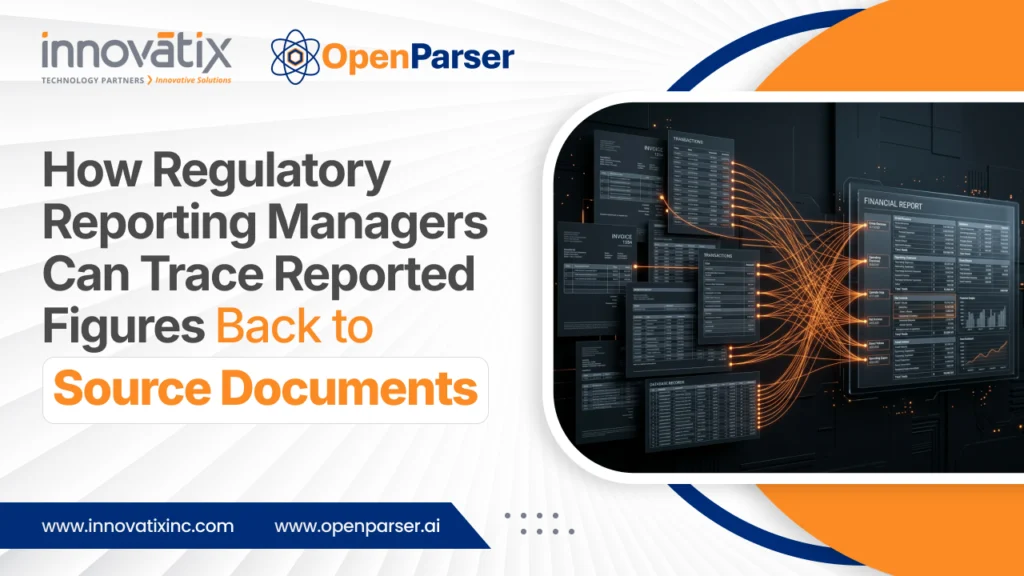
When a regulator comes knocking and asks why a figure in a submitted report doesn’t match a number in one of the internal records. The reporting team now needs to track down the original source of that number, figure out how it was even derived, and then lay hands on all the supporting data that was used.
Now, that information can be scattered all over the place, i.e., spreadsheets, policy documents, internal reports and all sorts of supporting records that different departments have been keeping along the way. And if several different people have gotten their hands on the data, well, it can take an awfully long time to dig it all up.
For a regulatory reporting manager, a reliable reporting process is all about being able to connect the dots, i.e., between the numbers in a report and the evidence they came from. AI-powered document intelligence tools can give teams a serious boost, by helping track down the right records, find and retrieve the information that actually backs up, and then bring it all together in a format that makes sense for reviewing.
Why Tracing Reported Figures Takes Time
A reporting figure rarely exists in isolation. It may depend on information collected from another department, a calculation based on internal records, or an interpretation of a particular requirement. Each step introduces information that a reviewer may need to validate.
The challenge grows when source material is scattered across systems and document formats. A reporting manager might have the final number in a spreadsheet but need to open several supporting files to confirm its origin. If the original record has changed or the assumptions are unclear, the review becomes more involved.
PwC’s Global Compliance Study found that 63% of respondents said the complexity and disaggregated nature of organizational data made compliance more difficult. Data reliability and quality were also identified as challenges by 56% of respondents. These findings underline why reporting teams need dependable access to the information behind their submissions.
What Should a Traceable Reporting Process Include?
A useful review process should help a manager move from the reported figure to its source, understand the information supporting it, and document the checks performed.
| Reporting requirement | What the manager needs to establish | Helpful document workflow |
|---|---|---|
|
01
Source identification
|
Which record supports the reported figure? | Search across the available document collection |
|
02
Data verification
|
Does the extracted value match the source? | Retrieve the relevant passage and verify it |
|
03
Requirement checking
|
What policy or requirement applies? | Compare supporting material with the relevant reference |
|
04
Change review
|
Has the supporting information changed? | Compare document versions and identify differences |
|
05
Evidence preparation
|
Can the figure and its basis be reviewed later? | Organize relevant records and retain source references |
These steps help distinguish a number that has simply been copied into a report from one whose supporting basis has been checked. They also give reviewers a more consistent way to respond when questions arise after submission.
How AI Can Support Source Verification
AI-powered document intelligence platform like OpenParser AI can help reporting teams with the document work surrounding report preparation.
- Search for supporting information – Natural-language document Q&A lets users ask questions about available records instead of relying solely on exact keyword searches. For example, a manager might ask which document supports a particular reported value or where a relevant policy requirement is described.
- Extract defined information – Structured extraction can collect specified fields from supporting documents and organize them for review. This can be useful when a reporting process relies on recurring information from large document collections.
- Compare documents and check requirements – Document comparison can surface changes between versions. Compliance and policy checking can help reviewers examine available material against reference requirements and identify items that warrant further attention.
Technology is already part of this work.PwC’s study found that 72% of respondents were using technology for regulatory disclosures and reporting. That points to a well-established role for technology in the reporting process, while leaving room to improve how supporting evidence is collected and verified.
AI outputs still require review. A source citation helps the manager find the relevant record, but the manager must confirm that the source is appropriate, the value is correct, and the interpretation fits the reporting requirement.
See How OpenParser AI Can Help Your Team Trace
Reported Figures to Supporting Documents
Frequently Asked Questions
1. Why is source traceability important in regulatory reporting?
It helps reporting teams explain where a figure originated, verify the supporting information, and respond to questions about how a reported value was derived.
2. How can AI help trace reported figures to source documents?
AI-powered document Q&A can retrieve relevant information from available records, while citations help reviewers locate the source material. Structured extraction and document comparison can support additional verification steps.
3. Can AI check whether a regulatory report is compliant?
AI can help compare available documents against specified policies or requirements and identify items for review. The reporting team must validate the results and determine whether the submission meets the applicable requirements.